
MCA Microsoft Certified Associate Azure Data Engineer Study Guide: Exam DP-203

Benjamin Perkins, Azure Data Engineer, C#

I am proud to announce the publication of my newest book titled, “Microsoft Certified Associate Data Engineer Study Guide” for the DP-203 exam. The example data used in this book consists of my brainwaves. You can download the data and the source code for all the examples in the book on GitHub here . ADLS, […]

Read More →
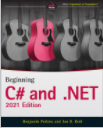

Microsoft Azure Architect Technologies and Design Complete Study Guide: Exams AZ-303 and AZ-304

I would like to proudly announce the release and availability of my new Azure Solution Architect Complete Study Guide. The book contains over 700 pages of material relating to the skills and knowledge required to become a great Azure Solution Architect. The book is designed around the requirements for passing both the AZ-303 and AZ-304 […]

Read More →

IIS Debugging Labs – Information and setup instructions

These labs provide a group of debugging scenarios focused on helping you get some hands on experience in debugging the most common type of IIS issues. For example, hang/performance, crash and memory issues. Installation These labs are focused IIS 8.5, but can be run on the following versions of IIS IIS Version Operating System IIS […]

Read More →

Implement a hub-and-spoke orchestration

In my last post Advanced multi-agent orchestration architectures I wrote about Hub-and-Spoke, Hierarchical, and Supervisor patterns.  In this article, as the title makes clear I will get a bit deeper into hub-and-spoke.  But before that, as I was writing the hub and spoke code I learned a few hard lessons.  I share them in case […]

Read More →

Advanced multi-agent orchestration architectures

In a previous article, The difference between Agentic AI and Multi-Agent Architectures, I touched on multi-agent systems and briefly on pattern selection.  This article will discuss those 3 patterns in more detail. In this article, Orchestrate a multi-agent solution using the Microsoft Agent Framework flat / foundational orchestration patterns were discussed.  They are Concurrent, Sequential, […]

Read More →

The difference between Agentic AI and Multi-Agent Architectures

Every multi-agent system is agentic, every agentic system is not multi-agent.  You can see textually some differences between them in Table 1 and Figure 1. An Agentic system is one which would respond to and infer the following prompt: The autonomous Agentic AI chooses the action instead of executing a pipeline or multiple agents.  The […]

Read More →

Forking Agent inference for managing complex domains and high-impact decisions

As I consume AI NLP responses I very often accept without much resistance, second guessing, or contemplation for or against the result presented to me.  I simply read it and if I agree, I take it as true and continue forward with my activity.  If I don’t agree I tend to respond with my doubt […]

Read More →

Prompt engineering techniques and reasoning patterns

Agent instructions are system prompts which define identity, purpose, goals, behavioral guidelines, tone, style, safety constraints, knowledge, capability boundaries, tool usage rules, output formatting requirements, task prioritization, domain specific knowledge, and reasoning instructions to name most.  This is why we should never overlook the non-code aspect of building AI Agents and AI solutions.  The manner […]

Read More →

Azure AI Agents: When to Use azure.ai.projects vs. agent_framework

As Azure AI Foundry adoption grows, developers are increasingly faced with an important architectural decision: The answer depends on where your agent lives and how you want to manage it.  Although both SDKs are part of the Azure AI ecosystem, they solve different problems. Understanding the distinction can save significant development effort and help you […]

Read More →

How to fine tune an AI model

There are numerous ways to optimize model performance.  Retrieval Augmented Generation (RAG) and Prompt Engineering are 2 relevant strategies, but also consider fine-tuning a model.  Fine-tuning influences the model with additional examples that reflect specific requirements.  These examples adjust the pretrained internal weights so that it produces responses consistent with patterns in the training data. […]

Read More →

Develop generative AI apps that use tools

Artificial Intelligence (AI) is more than OpenAI or Anthropic who have created some very awesome LLMs that can do amazing things, especially with Natural Language Processing (NLP).  AI can also extract information from documents, convert text-to-speech and speech-to-text, provide metadata and summaries of images and videos, of course AI Agents.  All of the AI capabilities […]

Read More →